Animals can accelerate soil building, pest management, nutrient cycling, and food production when integrated thoughtfully. On Kauaʻi, focus on species that fit local conditions, regulations, and available forage or space.
Hardy dual-purpose breeds well suited to Kauaʻi. Rhode Island Reds are excellent layers with strong foraging ability and good temperament. Australorps are calm, consistent layers and reliable mothers. Sussex offer solid meat quality alongside reliable egg production. Together they supply eggs, meat, nutrient-rich manure for composting, and active pest control (insects, weeds, and small pests). They work especially well in mobile chicken tractors rotated through orchards, garden beds, or food-forest edges to improve soil and reduce weeds. Secure housing and fencing are essential to protect from mongoose, dogs, and other predators.
Muscovy ducks are large, hardy, excellent foragers, and attentive mothers; they are particularly effective at controlling slugs, snails, and insects in wetter microclimates. Khaki Campbells are among the most prolific egg layers. Both produce high-quality manure and integrate well with ponds, wet edges, or aquaculture systems. They require clean water for drinking and bathing. Pairing ducks with tilapia or food-forest understory can create mutually supportive systems.
Require very little space, mature quickly, and produce eggs and meat consistently. A practical entry point for poultry on small lots or where larger birds are less suitable. Manure is concentrated and useful in compost.
Convert kitchen scraps, livestock manure, and plant waste into nutrient-dense worm castings. Simple to maintain in bins, beds, or in-ground systems. Castings improve soil structure, water-holding capacity, and plant health. One of the highest-return, lowest-labor ways to close nutrient loops on any property size.
Provide critical pollination for fruit trees and many crops, plus honey and beeswax. Kauaʻi has an active beekeeping community. Success depends on year-round diverse forage, careful mite management, and compliance with local regulations. Supporting bees with reduced pesticide use and diverse plantings benefits the whole system.
Essential pollinators for many native and food plants. Support by planting native and traditional flowering species, providing nesting sites (bare soil, hollow stems, untreated wood), and minimizing chemical inputs.
Kiko goats are hardy, parasite-resistant, and well adapted to tropical conditions; strong for meat and brush control. Nubians are dual-purpose with notable milk production and distinctive long ears. Both require robust fencing (they are skilled climbers and escape artists) and rotational grazing to prevent over-browsing of trees and soil compaction. Manure is valuable when composted or applied carefully.
Hair sheep that do not need shearing — well matched to Kauaʻi’s climate. Saint Croix and Barbados Blackbelly are hardy, parasite-resistant meat breeds. Katahdin are productive meat sheep with calmer temperaments. They graze grasses and forbs with less tree damage than goats when managed rotationally. Useful for maintaining open areas or carefully controlled orchard understory.
Produce rich milk suitable for cheese and other dairy products, and can serve as draft animals for plowing or hauling. Traditional in many tropical systems and tolerant of wet conditions. Require significant land, reliable water access, and strong fencing. Best suited to larger properties with capacity for rotational grazing and careful manure management to protect waterways.
Fast-growing fish suitable for ponds or integrated aquaculture. Can be paired with ducks, which help fertilize the water and control insects. Check current State of Hawaiʻi regulations on permitted species, stocking density, and water use before establishing any system. Nutrient-rich water can support plant production in carefully designed setups.
Animals are most valuable when they support the plant systems rather than replace them. Many successful Kauaʻi homesteads combine chickens or ducks with food forests and perennial plantings.
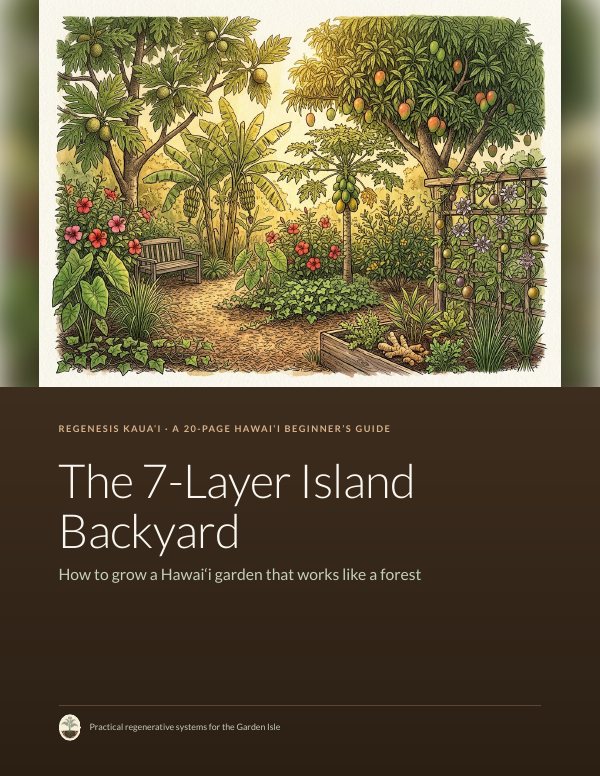
A 20-page guide to a Hawaiʻi garden that looks like a forest, free by email.